6 Money Saving Challenges That Make Saving Feel Like a Game
Saving feels hard when the month ends and the money is gone before you even notice where it went. You meant to save, you really did, but the small treats and the little top-ups ate it all, and now saving feels like a chore for someone else. These money saving challenges turn the whole thing into a game you can win one small step at a time.
I know that feeling well, because most saving advice sounds like a lecture, and lectures never helped anyone put money aside. The six challenges below work in a different way, because each one gives you a clear target, a short time limit, and a win you can see at the end. Pick the one that sounds like fun, start it today, and let the game do the work that willpower never could.
You do not need a big pay rise, a strict budget, or a new way of life to save money, because small games change how you spend without asking you to change who you are. Each challenge below takes a week or less to try, and each one leaves real money in your pocket at the end. That is the whole point, and that is why these games keep working long after the first week is done.
Before you start, grab a jar, an envelope, or a simple note on your phone, because you will want one place where your saved money lives and grows. You will see the pile grow with every challenge, and that sight is what keeps you going when the next challenge starts, so pick your first game and go.
Six Small Games That Turn Saving Money Into Something You Enjoy
1. Start Your Money Saving Challenges With One Simple No-Spend Week
What if you kept your wallet closed for seven whole days and found out how much of your spending is just habit? That is the dare of a no-spend week, and it is the fastest way to see where your money slips away. You still pay the bills that keep the lights on, but every extra spend waits until the week is done.
A no-spend week works because it breaks the habit of buying without thinking, and habits are what eat most spare money. When you stop the small spends for seven days, the money that would have gone out stays in, and you can see it sitting there at the end of the week. That sight alone makes the next week easier, because you have proof that you can do it.
The Federal Reserve found that 37 in 100 adults in the United States said they would struggle to pay a 400 dollar emergency bill from cash. What it means for you is that a single no-spend week can start the small buffer that keeps a surprise bill from turning into a worry, and that buffer grows every time you play the game.
Do it today in three steps.
- Pick seven days that start tomorrow and mark them on your calendar.
- List the spends that are allowed, like food you already planned and bus fares, and put the rest off.
- Move the money you would have spent into your jar or note at the end of each day.
Watch out for the tired evening, because that is when the old habit calls loudest and the takeaway menu looks like a good idea. Plan your meals before the week starts, keep a snack at home, and tell a friend what you are doing so you have someone to laugh with when it gets tough.
A good first result is simple: you reach day seven with money still in your pocket and a list of the things you wanted but never missed. If you saved even a small sum, you have won the game, and you can keep the best bits of it for every week that follows.
2. Fill 100 Envelopes One at a Time and Watch 5050 Pounds Grow
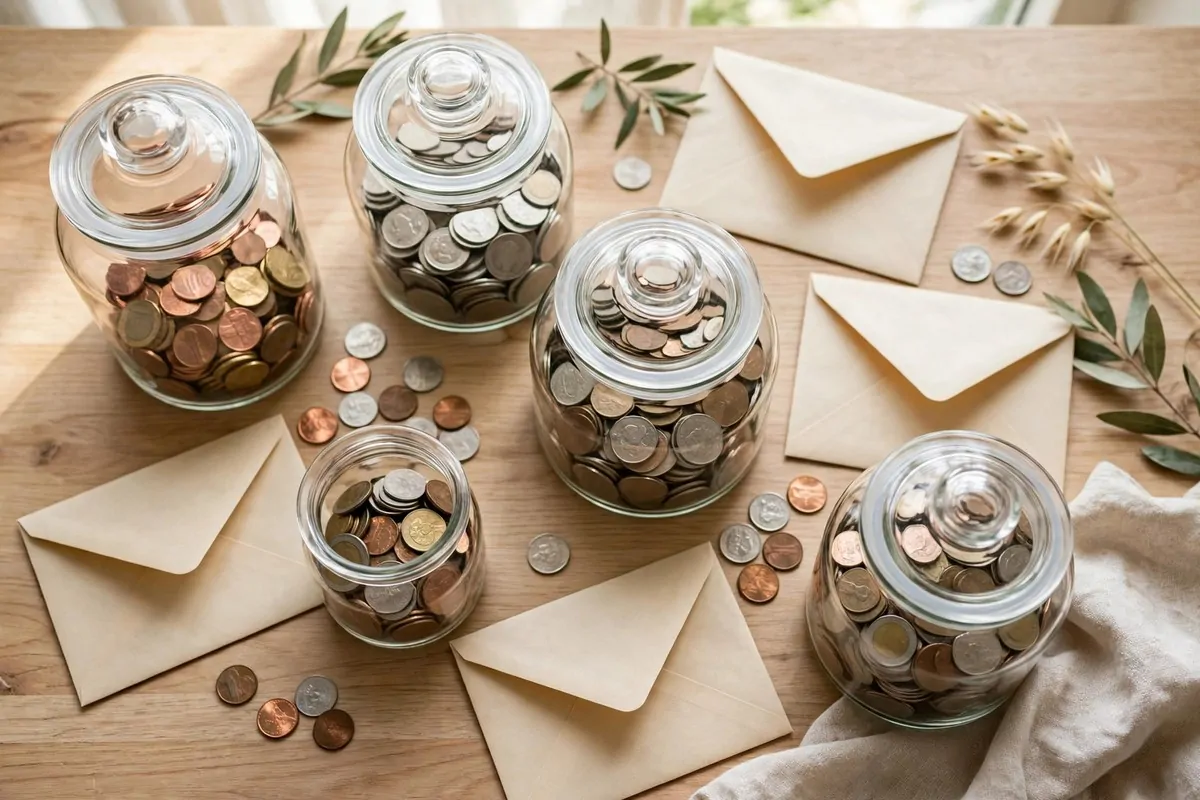
Picture a stack of plain envelopes on your kitchen table, each one with a number from 1 to 100, and a little pile of money growing inside them. That is the 100-envelope challenge, and it turns saving into a lucky dip you can play every single day. You pick one envelope, put in the money that matches its number, and the game does the rest.
The trick is the maths, and the maths is kind to you. If you fill every envelope from 1 to 100, you will have saved 5050 pounds by the end, and that total comes from small amounts that never hurt on their own. What it means for you is that tiny daily wins can add up to a serious sum without a single big sacrifice.
Do it today in three steps.
- Number 100 envelopes from 1 to 100 and put them in a box.
- Shuffle the box and pull one envelope each day, then put in the pounds that match its number.
- If a number is too big for that day, swap it back and take a smaller one instead.
Watch out for the big numbers at the start, because pulling 97 on day one can kill the fun before it starts. Mix the envelopes well, and if you want an easier game, play with numbers from 1 to 50 instead and still end with 1275 pounds.
A good first result is ten envelopes filled in ten days without a single missed day, because the streak matters more than the amount. Once the box starts to feel heavy, you will want to keep going, and that is the game working exactly as it should.
3. Round Up Every Small Purchase and Save the Spare Change Without Noticing
Try this first if you want to save without thinking about it at all, because the round-up challenge works while you get on with your life. Every time you spend, the cost rounds up to the next whole pound, and the spare change drops into your savings pile. You never feel it leave, and that is the whole point.
The spare change from one shop is tiny, but the spare change from a month of shops is real money, and it grows without a single hard choice. A survey by Bankrate found that 59 in 100 adults in the United States do not have enough savings to cover a 1000 dollar emergency bill. What it means for you is that a pile of round-ups can be the start of your own safety net, built a few pence at a time.
Do it today in three steps.
- Set up a round-up pot with your bank or use a jar by the door.
- After every shop, drop the spare change from the round-up into the pot.
- Check the pot once a week and write the total on a card so you can watch it grow.
I like this challenge because the saving happens in the background, and there is nothing to remember once it is set up. Watch out for the week when you shop a lot, because lots of small round-ups can add up faster than you expect, so check the pot often and smile at the total.
A good first result is a pot with money in it after just one week, even if the amount looks small. Small is fine, because the habit is the prize here, and a habit that runs on its own is worth more than a one-off big save.
4. Cook From Your Cupboards for a Week and Turn Old Food Into Saved Money
Open your cupboards and look at what is really in there, because most homes hold a week of meals that never get cooked. That is the pantry challenge, and it asks you to cook from what you already have before you buy a single new thing. You will be surprised at how much food is hiding at the back of the shelf.
This challenge works because food you already own is food you have already paid for, so every meal from the pantry is money that stays in your pocket. The United States Department of Agriculture estimates that 30 to 40 percent of the food supply is wasted at shops and in homes. What it means for you is that the food sitting in your cupboards is not clutter, it is money you can eat.
Do it today in three steps.
- Pull everything out of the cupboards, the fridge and the freezer and list what you find.
- Plan five meals from that list, using the oldest food first.
- Shop only for the fresh bits you truly need, like milk or bread, and nothing else.
Watch out for the meal that needs one thing you do not have, because that is the moment most people give up and order food in. Swap the missing bit for something you do have, or pick a different meal, and keep the game going instead of breaking it for one small thing.
A good first result is five home-cooked meals in a week with a food shop that costs far less than normal. If the cupboards look emptier and your wallet looks fuller, you have won, and you can run the same game every month.
5. Pay With Cash for One Week and Feel Every Pound Leave Your Hand
When was the last time you handed over real notes and felt the money leave your hand? That feeling is the whole point of a cash-only week, because notes you can see and count are much harder to spend than numbers on a screen. For seven days, you pay for everything in cash, and you watch the pile shrink.
Cash slows you down in a good way, because you have to think before you hand it over, and thinking is what stops the extra spends. A study from the Massachusetts Institute of Technology found that people were willing to pay twice as much for the same thing when they paid by card instead of cash. What it means for you is that a week of cash can cut your spending without a single rule about what you may or may not buy.
Do it today in three steps.
- Work out what you normally spend in a week and take that amount out in cash.
- Split the cash into seven small piles, one for each day, and use only that day’s pile.
- Put any cash left at the end of a day straight into your savings jar.
Watch out for the shop that only takes cards, because a few places have gone cash-free and you need a plan for them. Keep one small card spend in mind for those places, and do not let one exception end the whole week.
A good first result is cash left over on day seven, because left-over cash is proof that you spent less than normal. Even a few pounds left over is a win, and the habit of thinking before you pay is worth more than the money itself.
6. Cancel One Small Thing You Barely Use and Keep the Money Instead
Is there one small payment leaving your account each month for something you barely use? Most people have at least one, and the cancel-one-thing challenge is about finding it and stopping it. One small change, one less payment, and money back in your pocket every single month.
This challenge is the easiest of the six, because it takes ten minutes and the saving repeats itself without you doing anything else. A payment you forgot about is still a payment, and once it stops, the money stays with you month after month. That is why this challenge is the best one to start with if you want a quick win today.
Do it today in three steps.
- Look at your last month of bank payments and circle every regular payment.
- Ask yourself which one you used least in the last month and be honest about it.
- Cancel that one payment today and move the same amount into your savings jar each month.
Watch out for the thing you cancel and then miss, because some payments are worth keeping and this game is not about going without. If you truly miss it after a month, you can start it again, but most people find they never think about it twice.
A good first result is one less payment on your list and the same amount of money sitting in your jar at the end of the month. Do it once, feel the win, and then ask yourself if there is one more thing to cancel next month.
Key Takeaways: Money Saving Challenges That Work When You Start Small
- Try a no-spend week and watch how much of your spending is just habit.
- Fill the 100 envelopes one by one and let small amounts grow into 5050 pounds.
- Round up every shop and let the spare change build your safety net on its own.
- Cook from your cupboards first and turn food you already own into saved money.
- Pay in cash for a week so every spend feels real and the extra buys stop.
- Cancel one payment you barely use and keep that money every month from now on.
Your First Three Steps Today to Start Saving the Fun Way
Start today with three short steps, and do them in this order.
- Pick one challenge from the six above and write it on a card.
- Put your jar or note where you will see it every day.
- Tell a friend your plan so you have someone to cheer you on.
I want you to win the first week, because one win makes the second week easy and the third week a habit. The games are small, the rules are simple, and the money you save is real, so pick your game and start today.