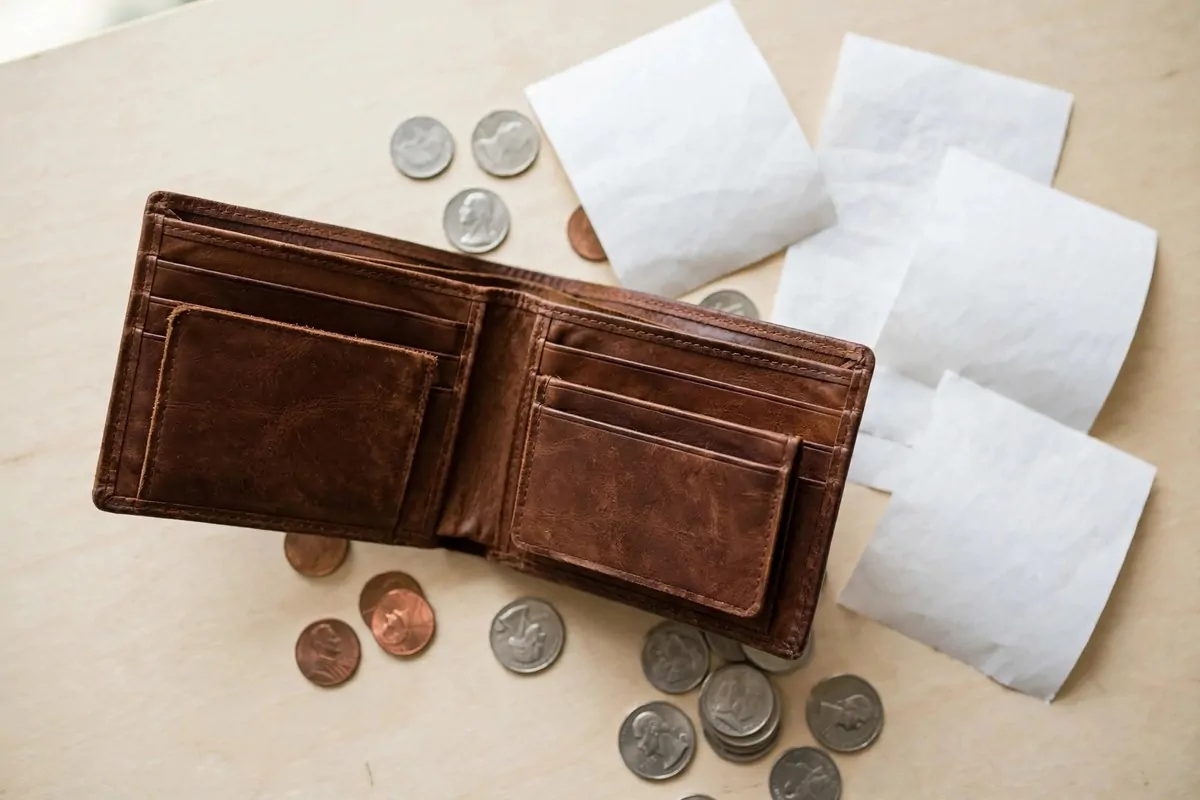
10 Huge Mistakes to Avoid When You Save Money
You tell yourself you will save money this month, and then the month ends with nothing left to show for it. The pay came in, the bills went out, and the little treats in between ate the rest. You are not lazy, and you are not bad with money.
I made most of these mistakes myself, so I know how they feel. Each one looks small on its own, but together they can drain a whole pay packet before you notice.
This post lists the ten huge mistakes that stop people from saving, in plain words. For each one, you will see what it looks like in real life, why it hurts you, and what to do instead today. By the end, you will have a clear first move for each mistake, and a simple way to keep your savings growing.
Read it once, pick the mistake that sounds most like you, and fix that one first. Small wins build fast, and one fixed mistake can free up more cash than a pay rise.
Ten traps that drain your savings before the month ends
1. Save money first by moving it aside the moment pay lands
Pay day lands, and for a few hours you feel rich. Then the bills, the food shop, and the little treats take their share, and saving gets whatever is left, which is often nothing.
Saving first means you move money aside the moment pay lands, before you spend a cent. You pick one fixed amount, and it leaves your main pot on pay day, every time. The rest is yours to spend, and you never have to decide again that month.
In a well-known study of a large US firm, researchers Brigitte Madrian and Dennis Shea found that when workers were put into the retirement plan by default, the share taking part rose from 49% to 86%. The people did not change, and the plan did not change. Only the default changed, and that one change nearly doubled the share of people who saved.
That tells you something plain about your own brain. Make saving the default, and you will save, because willpower will not have to win a fight every month.
Open a second pot today, and set a move for pay day. Start with an amount so small you barely notice it, even if it is only the price of two takeaway meals. Set it once, and let it run for three months before you change it.
Watch out for setting the amount too high and quitting after two weeks. A small amount you keep beats a big amount you drop. A good first result is simple: after three months, the money moved on its own, and you did not miss it.
2. Set a clear savings target with a number and a date
You want to save, but save for what, and how much, and by when? With no clear answer, the goal stays vague, and vague goals rarely survive the first tempting weekend.
A clear target is one number and one date. You might aim for 500 dollars in six months, or 1,000 dollars by the end of the year. The exact number matters less than the fact that it is written down and real.
Elizabeth Warren set out a simple split in her book All Your Worth: 50% for needs, 30% for wants, 20% for saving. Your target can be the first job for that 20%, and the split is a guide, not a law. Bend it to fit your own pay, and keep the saving share real, even when it is small.
That split gives your target a home inside your budget. You are not guessing, and you are not saving from scraps.
Pick one thing you want the money for, and write the number and the date on a card. Divide the number by the months left, and that is your monthly amount. Stick the card on the fridge, where you will see it each day.
Watch out for a target so big it scares you into doing nothing. A small target you hit beats a grand target you dodge. A good first result is a target you can say out loud without wincing, and a first month where the amount actually moved.
3. Split your cash into separate pots so each job has its own place
You open your banking app and see one big number, and it feels like plenty. Then rent, food, and fun all drink from the same pot, and by week three the pot is dry.
Separate pots mean each bit of money has one job. One pot pays the bills, one pot holds the fun money, and one pot is for saving. When the fun pot is empty, you stop, because the bill pot is not yours to touch.
This works because it turns a vague feeling into a clear line. You can see at a glance what is safe to spend, and you stop guessing.
Open two extra pots today, and name them plainly, such as Bills, Fun, and Saving. On pay day, split the money into the three pots right away. Keep your card tied to the fun pot only, so the other pots stay out of reach.
Watch out for moving money back from the saving pot to cover a night out. If you raid it once, you will raid it again, and the pot will never grow. A good first result is a saving pot that still holds its money at the end of the month, even if the amount is small.
4. Track the small daily buys that quietly eat your savings away
You grab a coffee on the way to work, a snack at lunch, and a small treat on the way home. Each one costs almost nothing, so you never think twice, yet together they add up to real money.
The drip is the slow leak of small daily buys that no one tracks. One coffee is cheap, but a coffee every workday is a habit with a price. The same goes for snacks, bottled water, and little extras that slip past unnoticed.
David Bach, who wrote about the latte factor, worked out that 5 dollars a day on coffee adds up to about 150 dollars a month. That is the price of a small treat, repeated until it becomes a bill. You do not have to quit coffee, and you do not have to quit treats either.
That number means your small buys are not small at all. Cut one daily buy in half, and you free up real cash without feeling deprived.
Write down every small buy for one week, even the tiny ones. At the end of the week, add them up, and circle the one that surprises you most. Halve that one buy next week, and move the saved cash into your saving pot the same day.
Watch out for cutting everything at once and feeling punished. One small cut you keep beats five cuts you drop by Friday. A good first result is a week where your small buys cost clearly less, and the saved cash is sitting in your pot.
5. Start with a tiny amount now instead of waiting for a pay rise
You keep telling yourself that you will start saving when the pay goes up. The pay goes up, and the spending goes up with it, so the saving still waits.
Waiting is the habit of putting saving off until life feels easier. Life rarely feels easier, and the perfect month never comes. The longer you wait, the more months pass with nothing set aside.
This hurts you because time is the one thing you cannot buy back. Money set aside now has years to grow, and money set aside later has far less time to do the same work. A tiny start today beats a grand start next year, because next year has its own excuses.
Pick the smallest amount you would not miss, even if it is only a few dollars a week. Move it into your saving pot today, not on pay day, and set it to repeat each week. When your pay rises, raise the amount a little, before the new spending habits form.
Watch out for the thought that a small amount is not worth the effort. Small amounts build the habit, and the habit builds the pot. A good first result is a pot with something in it after one month, and the quiet knowledge that you finally started.
6. Keep a cash cushion ready so sudden bills never wipe you out
The car needs a repair on the same week the rent is due. Without a cushion, that one bill can throw the whole month off track, and the stress lasts far longer than the repair.
A cash cushion is a small pot of money kept apart from daily spending. It is not for holidays, and it is not for treats. It is there so that real surprises stay small problems, not big ones.
The US Federal Reserve found that 63% of adults would cover a 400 dollar emergency bill from cash or its equivalent. That leaves more than a third of adults who would struggle, borrow, or skip the bill. You want to sit in the first group, and the only way there is a cushion of your own.
That number means a cushion is not a luxury, and it is not only for rich people. It is the line between a bad week and a bad year.
Open a pot and name it for surprises. Move a small fixed amount into it on pay day, even if it is only the price of two takeaway meals. Keep going until the pot holds one month of basic costs, then keep it topped up.
Watch out for dipping into the pot for fun spending. If you take money out for a night out, the cushion stops being a cushion, and the next surprise will hurt. A good first result is a pot with a few hundred in it after a few months, and the calm that comes with it.
7. Stop buying things to fix a mood because the thrill fades fast
You had a long day, and the shops look warm and bright. You buy something you did not plan to buy, and for ten minutes you feel better, then the feeling fades and the money is gone.
I used to buy things when I felt bored, and the thrill never lasted past the walk home. A mood buy is a purchase made to fix a feeling, not to meet a need. The thing is rarely the point, and the feeling comes back the next day.
This hurts you because feelings pass, but spending stays. The money leaves your pot for good, and the low mood is still there an hour later.
Make a simple rule today: wait one full day before any buy you did not plan. Write the thing down, and walk away. I tried this rule myself, and most of the things on my list never got bought.
Watch out for the sales that shout at you to buy now or miss out. A real need will still be there tomorrow, and a fake one will fade by morning. A good first result is a list of things you wanted, then did not buy, and a pot that kept the money.
8. Quit copying other people’s spending and set your own pace instead
A friend shows off a new phone, a neighbour drives a new car, and a stranger online seems to live in a hotel. You start to feel behind, and spending feels like the only way to catch up.
Keeping up means spending to match what other people seem to have. You compare your real life with their best moments, and your own life starts to look thin. The race has no finish line, because there is always someone with more.
This hurts you because you are chasing a picture, not a need. The money goes on things that impress people for a day, while your own goals wait.
Unfollow the accounts that make you feel poor, and mute the ones that sell a life you do not want. Write down three things you already have that work well, and read the list when the urge hits. Set your own pace, and let other people run their own race.
Watch out for the thought that everyone else is doing fine. Most people are guessing, and many are spending money they do not have. A good first result is a quiet week with no keeping up buys, and a pot that grew instead.
9. Check where your money went each week so leaks show up early
You check your balance only when you feel brave, and the number is always a surprise. Small slips hide when you never look, and by the end of the month the money is gone.
A weekly check is a short sit down with your own money. You look at what came in, what went out, and what your goals need next. You are not judging yourself, and you are not fixing everything at once.
A study at Dominican University of California, led by Gail Matthews, found that people who wrote their goals down were 42% more likely to reach them than people who only thought about them. Writing turns a wish into a plan, and a plan is far easier to follow. That is why the weekly check starts with your written goals, not with your balance.
That means your pen matters as much as your pay. Write the goal, check it weekly, and the rest of the system starts to hold together.
Pick one evening each week and put it in your calendar. Write three money goals on one page, with a date next to each one. Each week, tick what moved, note one slip, and pick one fix for the week ahead.
Watch out for turning the check into a guilt trip. The point is to spot one fix, not to scold yourself for an hour, and a calm check is one you will keep doing. A good first result is a month of checks without a gap, and the clear knowledge of where your money goes.
10. Keep going after a bad month because one slip is not failure
You had a great month, then a bad one, and the bad one makes you feel like the whole plan failed. You stop saving, you stop checking, and the good habits fade in a week.
Quitting after one bad month means treating a slip as the end of the story. One bad month is not a failed plan, and it is not proof that saving does not work for you. It is just a month, and months pass.
The 52 week money challenge shows how small steps add up: save 1 dollar in week one, 2 dollars in week two, and keep adding a dollar each week, and you end the year with 1,378 dollars. The early weeks feel tiny, and the later weeks do the heavy work. That is how saving works in real life too, slow at first, then strong.
That means a bad month is only a pause, not a stop. The challenge works because you keep going, not because every week is perfect.
After a bad month, restart with the smallest amount you can keep. Write down what went wrong in one line, and pick one fix for the next month. Then move the money on pay day, as if the bad month never happened.
Watch out for the all or nothing trap, where one slip means you drop the whole plan. A plan that survives a bad month is a plan that works. A good first result is a second month where you saved again, even a little, and the habit is still alive.
Key takeaways: ten simple moves that help you save money
- Move savings on pay day first, so saving never waits for leftovers.
- Write one number and one date for your saving target, and keep it where you can see it.
- Split your cash into named pots, and spend only from the fun pot.
- Track every small daily buy for a week, then halve the one that surprises you.
- Start with a tiny amount this week, and raise it when your pay rises.
- Build a cushion for sudden bills until it covers a month of basic costs.
- Wait a full day before any unplanned buy, and let most urges fade on their own.
- Mute the spending that makes you feel behind, and run at your own pace.
- Write your money goals down, and check them once a week with one small fix.
- Restart with a small amount after a bad month, and keep the habit alive.
Start today with three small steps that help you save money
- Move a small fixed amount into your saving pot today, even if it is only a few dollars.
- Write one saving target with a number and a date, and stick it where you will see it.
- Pick one evening this week for your first money check, and put it in your calendar.
That is the whole start, and it takes less than an hour. Do it today, and your future self will thank you for it.