4 Money Mistakes People Make in Their 20s
Your pay lands on Friday and it is gone by the next Friday. You are not careless, and you are not broke, but the money never seems to stay long enough for you to build anything with it.
That feeling is normal in your twenties, and it is also fixable. Most of the money mistakes people make at this age come from small daily habits, not from one big wrong choice. The good news is that small habits can change fast, and the four fixes below start with what you earn right now.
Read this the way you would read a note from a friend who has made these same mistakes. Then pick one fix, do it today, and let the first small win show you the rest is possible.
By the end you will have a simple spending plan, a first safety cushion, a start on saving for the future, and a way to keep your spending below your pay as your pay grows.
Four small money moves that keep your twenties on track
Track your spending
Write down every dollar for one week.
Save a little first
Move a small sum to savings on payday.
Start saving now
Small sums now beat big sums later.
Spend below your pay
Let your pay rise faster than your spending.
Small steps each week beat one big plan that never starts.
1. Spending every dollar you earn without a plan for where it goes
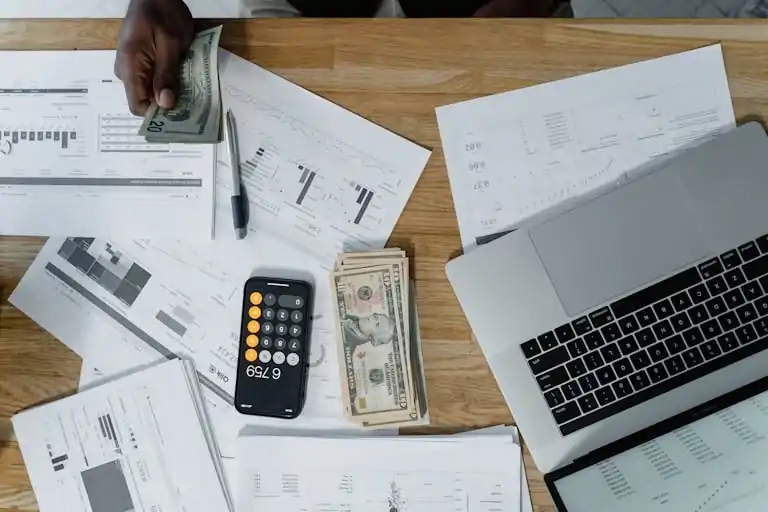
Have you ever checked your balance on a Monday and wondered where the whole pay went? The money did not vanish in one big purchase, it slipped away in small ones you barely noticed.
A spending plan is not a strict diet for your money. It is a short list that says how much goes to food, fun, bills, and saving before the month starts. When you skip that list, every small treat feels free, and free treats add up fast.
The United States Federal Reserve found in 2023 that about 37 in every 100 adults said they were just getting by or finding it hard to get by. That number tells you this is not a problem for a few careless people. It is a daily strain for millions of people who earn a fair wage and still feel short at the end of the month.
Most people find two or three small costs they forgot about, such as snacks, rides, or a second coffee. Those small costs are not the enemy, but knowing them gives you the power to choose which ones to keep.
Try this first. Open your banking app tonight and look at the last 30 days of spending. Write down the three biggest groups, such as food out, rides, and fun, and put one number next to each.
Then pick one group to cut by a small sum this week, and move that sum to savings on payday. Do it in two steps, so the change is easy to keep.
Watch out for the trap of building a perfect plan on paper and never using it. A simple list you check each Sunday beats a detailed sheet you open once and forget.
A good first result looks like knowing where your next pay will go before it lands. You will feel the change the first time you say no to a small treat and know exactly what that money is for instead.
2. Putting off your emergency savings is one of the costliest money mistakes
Picture the week your car needs a new tyre, or your phone screen cracks the day before rent is due. Without a cushion, a normal surprise turns into a stressful month.
An emergency fund is a small pile of money set aside for surprises only. It is not for holidays or new shoes, and it is not a second spending pot. Its only job is to catch you when life throws a cost you did not plan for.
The United States Federal Reserve found in its 2022 report that about 37 in every 100 adults said they could not pay a sudden 400 dollar cost with cash or the same kind of money. That means more than a third of adults would have to find another way to pay for a broken phone or a car repair, and that scramble is stressful.
Bankrate found in a 2024 survey that only 44 in every 100 adults in the United States said they could pay a sudden 1,000 dollar cost from savings. Your first cushion does not need to be 1,000 dollars, but it needs to exist, because even 200 dollars set aside changes a bad week.
Do it today in three steps: first, open a separate savings pot in your banking app and name it for surprises; next, set a small move of money to that pot on payday, even if it is only 20 dollars; then leave the pot out of your daily spending, and check it once a month.
Watch out for dipping into the pot for a sale or a night out. Every dip teaches you the pot is not serious, and a pot you do not respect will be empty when you need it.
A good first result is 100 dollars sitting apart from your spending money. That small sum buys you calm the next time a surprise cost lands, and calm is worth more than the number.
3. Waiting until later to start saving steals the best years from your money
Try this first. Think about the person you will be at 50 and ask what they wish you had done at 25. The answer is almost never spend more, and it is almost always start sooner.
Saving for the future works best when you start early, because time does the heavy work. Money you set aside in your twenties has decades to grow, while money you set aside in your forties has half that time. Starting with a small sum now beats waiting for a big sum later.
A study by economists Brigitte Madrian and Dennis Shea found that when workers had to sign up for a work savings plan on their own, only 49 in every 100 joined, but that rose to 86 in every 100 when they were signed up by default. The lesson for you is simple. Make saving the easy choice by moving the money on payday, before you can spend it, so you never have to decide each month.
I learned this one late, and I wish I had started with a small sum in my first job. Even 25 dollars a month, moved on payday, builds a habit that grows with your pay.
Do it today in three steps: first, pick one small sum you can spare each month, such as 25 or 50 dollars; next, set it to move on payday to a pot you do not touch for daily spending; then raise the sum a little each time your pay rises.
Watch out for the idea that you need a big pay before you start. A big pay rarely comes with a big habit, and people who wait often keep waiting at every pay level.
A good first result is a small sum moving on its own each payday, without you thinking about it. After three months you will have proof that saving fits your life, and that proof makes the habit stick.
4. Raising your spending every time your pay rises keeps you stuck in place
Your pay goes up, so you get a nicer flat, a better phone, and lunch out every day. A year later your pay is higher, but your savings are the same as before.
This is lifestyle creep, and it is the quietest of the money mistakes in this guide. Each rise in spending feels small and earned, so you never feel the loss. But when your spending climbs as fast as your pay, your savings stay flat and your freedom never grows.
A 2024 survey by Charles Schwab found that the average American says it takes about two and a half million dollars to feel wealthy. That number shows how easy it is to chase a target that keeps moving, and the chase itself is what keeps people feeling short.
Compare your life now to your life two years ago, and ask which new costs made life truly better. Keep the ones that did, and let the rest go, because the money you free up buys you choice later.
I keep a simple rule for every pay rise, and it has saved me more than any budget ever did. Half of the rise goes to savings, and half goes to spending, so life gets a little better while savings grow too. A pay rise of 200 dollars a month means 100 for savings and 100 for the fun you wanted.
Do it today in three steps: first, write down your pay now and the amount you save each month; next, decide the split you will use for your next rise, such as half and half; then tell a friend or write it in your phone, so the promise is real before the money lands.
Watch out for the month after the rise, when new treats feel normal fast. A new habit takes about a month to feel like yours, so give the split one full month before you judge it.
A good first result is a savings sum that grows at the same time as your spending. You will feel the win the first month your pay rises and your savings rise with it, while life still feels a little better.
Key takeaways: four money mistakes to fix while you are still young
- Track every dollar for one week, then give each dollar a job before the next pay lands.
- Build a small safety cushion first, even 100 dollars set aside changes a bad week.
- Start saving for the future now with a small sum that moves on payday by itself.
- Split every pay rise in half, so your savings grow as fast as your spending.
What to do first today in three short steps
- Write down what you spent in the last 30 days and pick one group to cut.
- Open a savings pot for surprises and move 20 dollars into it today.
- Set a small sum to move on payday, and split your next pay rise in half.