Budget Makeover in 6 Easy Steps That Actually Work
You know the feeling. Payday lands, the money looks fine, and then somehow it is gone before the month ends. You stare at your balance and wonder where it all went.
That gap between what you earn and what you keep is the problem this budget makeover fixes. It is not about living on beans and toast, and it is not about a spreadsheet you will abandon by Tuesday.
A budget makeover means looking at your money with fresh eyes, keeping what works, and changing only the parts that leak. By the end of this guide you will have a plan you can run in ten minutes a week. You will know where every dollar goes, and you will have cash set aside before the next surprise bill arrives.
Your Six Step Budget Makeover Map at a Glance
1. Face Your Real Numbers Tonight Before You Change Anything Else
When did you last look at a full month of your own spending? Most people guess, and most guesses are wrong by a wide margin.
This step is simple. You pull together one month of bank and card statements and write down what came in and what went out. No judging, no fixing yet, just the plain truth on one page.
Sort the spending into needs and wants as you go, but keep it rough. Rent, bills, groceries, and travel to work sit on one side, while takeaways, streaming, new clothes, and nights out sit on the other. Rough is enough for tonight, because you will sharpen it later.
Why does this help you? Because a plan built on guesses falls apart in week two, while a plan built on real numbers holds. You cannot fix a leak you cannot see.
Do it today in three moves, starting with your take-home pay for last month from your banking app. Second, add up what you spent in five groups: home, food, transport, fun, and everything else. Third, subtract spending from pay and write the answer in big letters at the top.
A survey by the Federal Reserve found that 37 out of 100 adults would not cover a 400 dollar surprise bill with cash or money they already had. That is not a failure of character, it is a sign that most people never see the gap until it bites.
If the number is negative, do not panic. It only means last month cost more than you earned, and now you know the size of the hole. Knowing the size is what makes the next five steps work.
If you share money with someone else in the house, sit down together for this step. Two sets of eyes catch more than one, and a shared plan is far easier to keep. Agree on the five groups first, then split the job of adding things up.
Watch out for the trap of rounding down the fun spending and rounding up the saving. A good first result looks like one honest page with a single number at the top, even if that number stings a little.
Keep this page somewhere you will see it. Tape it inside a kitchen cupboard or keep it as the first note on your phone. You will check it again in step six, and the change will surprise you.
2. Give Every Dollar a Clear Job Before the Month Even Starts
Picture payday morning. The money lands, and by lunchtime you have already spent some of it without a plan. A budget makeover changes that order, because the plan comes before the spending, not after it.
Giving every dollar a job means deciding in advance what each part of your pay is for. Housing gets its share, food gets its share, fun gets its share, and saving gets its share first, not last.
Figures from the Bureau of Labor Statistics show that housing takes 33 out of every 100 dollars of the average household budget in America. That means your biggest bill deserves the first line of your plan, not the last. When the big lines are set, the small ones stop causing trouble.
Why does this help you? Because money without a job drifts toward whatever shouts loudest, and that is usually the fun stuff. A job for every dollar turns vague worry into a clear yes or no.
Do it today in three moves, starting with five pots: home, food, transport, fun, and saving. Write the amount next to each pot and check that the five add up to your pay. Then move the saving pot on payday, before anything else gets a chance.
Watch out for pots that are too tight to live with. A food pot that runs out on day ten will break the whole plan, so set amounts you can actually keep.
A good first result looks like a short list with five numbers that add up. You should be able to say, in one breath, what each part of your pay is for. If you can do that, the plan is already working.
Start with a rough split and fix it after a month of real life. A plan that bends a little lasts far longer than a perfect plan that snaps.
Give the fun pot a real amount, not a token one. A plan with no room for joy is a plan you will quit, so protect a little money for the things that make the week good.
3. Build a Small Safety Cushion First and Stop Living on the Edge
What happens in your house when the car needs a new tyre or the washing machine stops? If the answer is a sinking feeling, this step is for you.
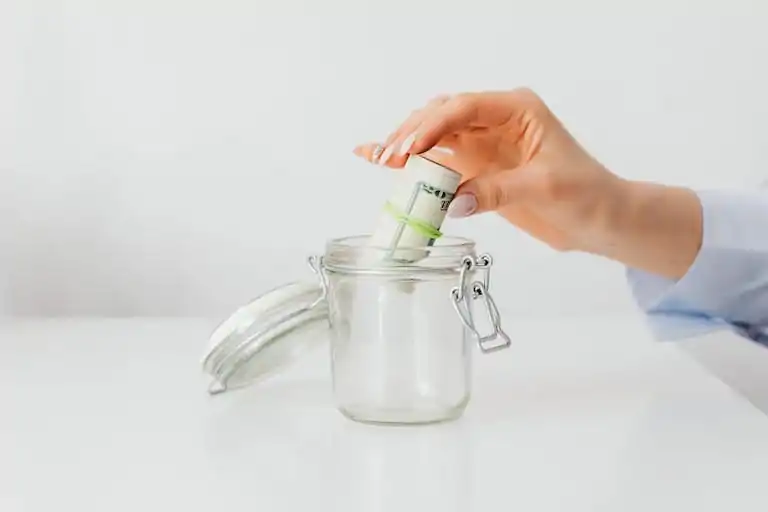
A safety cushion is a small pot of money kept apart for surprises only. It is not for holidays, and it is not for a new sofa. It sits quietly until life throws a bill at you, and then it saves the month.
Why does it help you? Because a surprise bill without a cushion turns into stress, skipped meals, or a hole in next month. With a cushion, the same bill is just an annoying afternoon.
A survey by Bankrate found that 59 out of 100 Americans could not pay a 1000 dollar emergency expense from savings. That number is your reason to start small and start now, because even a little cushion beats none at all.
Do it today in three moves, starting with a separate savings account or a named pot in your banking app, so the money is out of sight. Second, set a first target of 500 dollars, which is enough to cover most small shocks. Third, move a small fixed amount into it on payday, even if it is only 25 dollars.
Tell the people in your house what the cushion is for, so nobody treats it as spare cash. A pot with a clear purpose is far harder to raid than a pot with no name. Call it the surprise pot, and let everyone know it stays untouched.
Watch out for dipping into the cushion for non-surprises. A sale is not a surprise, and a takeaway is not a surprise. If you spend it on fun, it will not be there when you need it.
A good first result looks like a separate pot with its first deposit inside. Even 25 dollars counts, because the habit matters more than the size at this stage.
I keep a short list on my fridge of what counts as a real surprise, and it has three lines: home repairs, car repairs, and health costs. Everything else waits for the fun pot. That little list has saved my cushion more times than I can count.
4. Cut Three Small Spending Leaks Without Feeling Deprived or Miserable
You are standing in the supermarket queue with a basket that holds three things you never planned to buy. We have all been there, and those small extras are exactly what this step fixes.
A spending leak is a small cost that repeats so often you stop noticing it. One takeaway coffee a week is nothing, but the same habit every workday quietly eats a slice of your pay.
Figures from the Bureau of Labor Statistics show that transport takes 17 out of every 100 dollars of the average household budget. Small choices about how you get around can free real money, and that is why this step looks at habits, not willpower.
Look at your travel first, because it is the second biggest slice after housing. Walking for short trips, sharing lifts with people you know, or planning errands into one trip can trim the cost without changing your life.
Start today by picking three leaks from last month, such as daily snacks, unused subscriptions, or impulse buys at the till. Give each one a smaller limit instead of banning it outright. Then move the money you save into your cushion pot on the same day.
Why does this help you? Because cutting three small leaks beats cutting one big joy. You keep the things you love and lose the things you barely notice.
Watch out for the all or nothing trap. Banning every treat for a month feels strong on day one and falls apart on day nine. A smaller limit you can keep beats a perfect rule you drop.
A good first result looks like three smaller numbers on your list and one growing cushion pot. You should feel lighter, not punished, and that feeling is the point.
I tried the cold turkey route once, and it lasted four days. Three gentle cuts lasted all year, and that is why I suggest them here.
5. Automate Your Saving on Payday So Good Habits Happen Without Willpower
Try this first if willpower has ever let you down. Set the saving to move by itself, and you will never have to argue with yourself about it again.
Automating means your bank moves a set amount into saving on the day your pay lands. You do not decide each month, and you do not forget. The money is simply gone from spending before you can miss it.
Why does it help you? Because the best plan is the one that runs while you are busy living. Willpower is a poor tool for a monthly job, so give the job to a standing order instead.
The Federal Reserve found that 69 out of 100 adults could pay an expense of at least 500 dollars using only their current savings. That kind of buffer rarely comes from remembering to save each month. It comes from a habit that runs by itself, and that is the whole point of this step.
Do it today in three moves, starting with an amount you will barely notice, even if it is only 25 dollars. Second, set a standing order or automatic move for payday, into saving or into your cushion pot. Third, put a note in your calendar to raise it a little after three months.
Watch out for setting the amount too high at the start. A move that bounces back unpaid helps nobody, so start small and grow it slowly.
A good first result looks like a payday where saving happens before you wake up. You check your balance, the money is already set aside, and you simply carry on.
If your pay date moves, move the saving date with it. The rule is simple: saving rides on payday, never on leftover money at month end. Leftovers are rare, but payday is certain.
6. Review Your Budget Makeover Every Sunday in Just Ten Minutes
Sunday evening, cup of tea in hand, you open your notes for ten quiet minutes. That tiny ritual is what keeps the whole budget makeover alive, because plans fade when nobody looks at them.
A weekly review is a short check of what you spent, what is left in each pot, and what needs a tweak. It is not a test, and there is no pass or fail, just a look at the week that passed.
Why does it help you? Because small problems are easy to fix on Sunday and painful by month end. A pot that ran dry on Wednesday can be topped up, trimmed, or swapped before it ruins the week.
Set it up today: pick ten minutes you will guard, such as Sunday after supper. Write three numbers each week: what came in, what went out, and what is left. Then move money between pots if one ran short, and note one thing to change next week.
Watch out for turning the review into a guilt session. The point is to learn, not to scold yourself. If a pot ran dry, the pot was wrong, not you.
A good first result looks like a calm Sunday note with three numbers and one small change. After four Sundays you will see a pattern, and patterns are what turn a one month fix into a lasting habit.
Keep the review short on purpose. Ten minutes is enough, and a longer session will tempt you to skip it. Short and steady beats long and rare, every single time.
If you miss a Sunday, do not wait for next week to catch up. Do the ten minutes on Monday instead, and keep the chain going. A missed week is only a problem if it turns into a missed month.
Key Takeaways: Your Budget Makeover in Six Moves You Can Repeat
- Look at one real month of spending before you change a thing, because honest numbers make every later step work.
- Split your pay into five named pots on payday, and move the saving share first.
- Start a small separate cushion for surprises, and add to it every payday.
- Trim three small daily leaks instead of banning the joys that keep you going.
- Set saving to move by itself on payday, so it happens even on busy weeks.
- Spend ten minutes each Sunday checking the numbers, and fix small gaps early.
Start Tonight and Let Your Budget Makeover Grow From There
A budget makeover is not a single brave day, it is six small moves repeated until they feel normal. Tonight you can face the numbers, and tomorrow you can give every dollar its job.
You do not need a perfect plan, and you do not need a big pay rise. You need one honest page, five pots, and a cushion that grows a little each payday. That is enough to change how the end of the month feels.
Pick the step that feels easiest and do it before bed. Small wins build trust, and trust keeps you going when the novelty fades.
- Pull up last month and write down what came in and what went out.
- Split your pay into five pots and move the first saving amount.
- Set a ten minute Sunday review and guard it for the next four weeks.