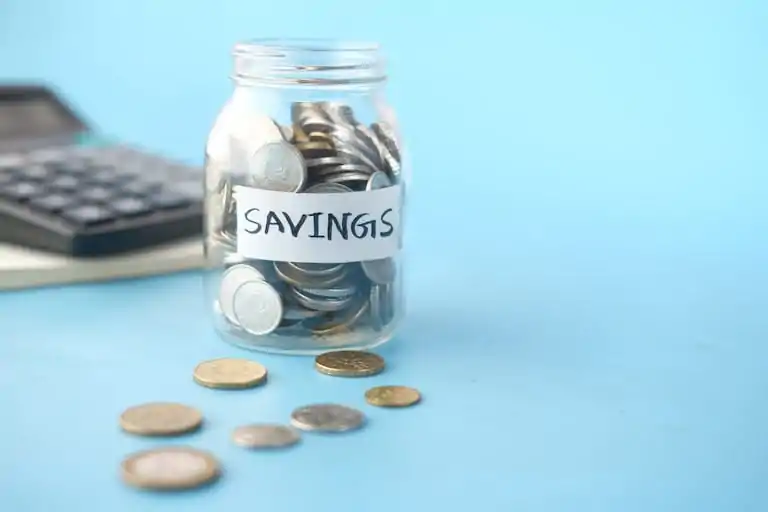
5 Smart Financial Decisions to Make in Your Twenties
Your twenties feel like a strange mix of freedom and worry. You finally earn your own money, and yet the month still ends before the money does. You want to enjoy life now, and you also want to stop feeling behind.
I wish someone had sat me down at 22 and said this plainly. You do not need a perfect plan, and you do not need a big salary to start well.
You need five clear moves, made early, and repeated without drama. This post gives you five financial decisions in plain words. By the end, you will know exactly what to do first, and you will have a simple way to check your progress each week.
No tricks live here, and no jargon either. Just five choices that work for ordinary people with ordinary pay.
If you take one idea from this post, take this: small moves made early beat big moves made late. The people who feel calm about money at 40 are often the ones who made five simple choices at 25. You can be one of them, and you can start today.
Five moves that shape the next forty years of your money
1. Pay yourself first so saving happens before spending starts
Pay day lands, and the money feels like it belongs to you at last. Then rent, food, and fun take their share, and saving gets whatever is left, which is often nothing.
Paying yourself first flips that order. You move a fixed amount into savings the moment pay arrives, and you live on the rest. The amount can be small, because the habit matters more than the size.
Set the amount so low that you barely notice it. A good start is 10% of your pay, or even 5% if money is tight right now. You can raise it later when your pay rises.
Think of a friend who saves a little each month without fuss. They are not richer than you, and they do not earn more than you. They just made the move automatic, and the money piles up while they get on with life.
In a well-known study of a large US firm, researchers Brigitte Madrian and Dennis Shea found that when workers were put into the retirement plan by default, the share taking part jumped from 49% to 86%. The people did not change, and the plan did not change. Only the default changed, and that one change nearly doubled the share of people saving.
That tells you something useful about your own brain. Make saving the default, and you will save, because willpower will not have to win a fight every month.
Open a separate savings pot today, and set an automatic move for pay day. Start with an amount you can keep even in a tight month. Then leave it, and let the habit settle for three months before you touch the amount.
Watch out for setting the amount too high and quitting after two weeks. A small amount you keep beats a big amount you drop.
A good first result is simple: after three months, the money moved on its own, and you did not miss it. That quiet win is the whole point, and it proves the system works for you.
2. Build a cash cushion first so surprises never wreck your month
The washing machine breaks on a Tuesday, and the bill lands the same week as rent. Without a cushion, that one bill can throw the whole month off track, and the stress lasts far longer than the repair.
A cash cushion is a small pot of money kept apart from daily spending. It is not for holidays, and it is not for treats. It is there so that real surprises stay small problems, not big ones.
Life in your twenties is full of firsts, and firsts often come with bills. A cushion gives you room to breathe, and it stops a bad week from turning into a bad year.
Think of the last time a small bill caught you off guard. You paid it, but the month felt tight for weeks after. A cushion turns that same bill into a shrug, and the month carries on as normal.
Elizabeth Warren set out a simple split in her book All Your Worth: 50% for needs, 30% for wants, 20% for saving. Your cushion can be the first job for that 20%, and the split is a guide, not a law. Bend it to fit your own pay, and keep the saving share real, even when it is small.
That split means your cushion has a clear home in your budget. You are not guessing, and you are not saving from scraps.
Open a second pot and name it for surprises. Move a small fixed amount into it on pay day, even if it is only the price of two takeaway meals. Keep going until the pot holds one month of basic costs, then keep it topped up.
After a year of steady saving, the cushion should hold a month of basic costs. That is a quiet kind of wealth, and it shows up as calm when things go wrong. You sleep better, and you choose better, because panic is no longer in charge.
Watch out for dipping into the pot for fun spending. If you take money out for a night out, the cushion stops being a cushion, and the next surprise will hurt.
A good first result is a pot with a few hundred in it after a few months. The first time it covers a repair without panic, you will feel the difference at once.
3. Start investing small and early because time rewards patient people most
You look at your savings one day and think, this is too small to matter. Then a friend mentions that they started with the same small amount five years ago, and now their pot looks very different.
Investing means putting money into things that can grow over years, such as a broad fund that holds shares in many firms at once. You are not picking winners, and you are not chasing hot tips. You are buying a small slice of many firms and holding it for a long time.
Time is the one thing your twenties give you for free. Money put in now has decades to grow, and money put in later has far less time to do the same work.
Think of two people with the same pay and the same habits. One starts at 25, and the other waits until 35, and the gap between them grows every year. The first person did nothing clever, and they still end up far ahead, because time did the work.
Here is the maths, shown as a plain example: $200 a month at 7% a year builds about $525,000 by age 65 if you start at 25, but only about $244,000 if you start at 35. The monthly amount is the same in both cases, and the yearly growth is the same too. Only the start date changes, and that ten-year gap costs more than half the final pot.
That example means your twenties are worth more than your thirties for this one job. Starting small now beats starting big later, and that is why this move sits near the top of the list.
Pick a simple low-cost fund that spreads your money across many firms. Set a small monthly amount, even if it is only the cost of a few coffees, and set it to move on its own each month. Then check it only twice a year, because daily checks only feed worry.
Some people wait for the perfect time to start, and the perfect time never comes. A small start today beats a perfect start next year, because next year has its own excuses. Start small, start now, and let time work for you.
Watch out for tips from strangers and for funds with high fees. Fees eat growth quietly, year after year, and a fund that costs little keeps more of the growth for you. If you do not grasp a fund in one plain sentence, do not buy it yet.
A good first result is not a big pot, and it is not quick growth. It is a habit that runs on its own, and a balance that climbs a little each month, even in slow years.
4. Spend on skills that lift your pay because learning pays you back
You scroll past a course that costs less than a night out, and you think, I will do it later. Later never comes, and a year passes, and your pay stays exactly where it was.
Spending on skills means paying for learning that makes your work worth more. It can be a short course, a licence, or practice with a tool your field uses every day. The point is simple: you come out able to do something that more people will pay for.
Your pay in your twenties is mostly a starting point, not a fixed fact. Each new skill widens the jobs you can do, and wider choice means stronger pay over time.
Think of a skill you already use at work each day. A short course could turn that rough skill into a sharp one, and sharp skills earn more than rough ones. You do not need a new career, and you do not need years of study, because one strong skill can lift your pay a lot.
Researchers at Georgetown University found that people with a bachelor’s degree earn about 84% more across their working lives than people who stop at high school. The gap comes from the doors a degree opens, and from the skills it builds. That number is about a degree, but the same idea holds for any skill that employers truly need.
That means learning is not a cost to avoid, and it is not a luxury either. It is one of the few things you can buy in your twenties that keeps paying you back for decades.
Pick one skill that pays more in your field, and ask two people who do that work what helped them most. Choose the cheapest good way to learn it, such as a short course or free practice with real tasks. Give it three evenings a week for one month, and keep a note of what you can now do.
After a year of steady learning, you should have two or three pieces of work to show. Those pieces speak for you in a way that words on a page cannot. They prove the skill, and they give people a reason to pay you more for it.
Watch out for courses that promise fast riches and charge big fees. A good course shows you real work from past students, and a weak one hides behind bold claims and bright ads.
A good first result is a small piece of real work you can show someone. One finished project often opens more doors than a pile of half-done courses, and it proves the skill is real.
5. Review your money each week so small financial decisions stay on track
Checking the bank balance only when you feel brave is a habit that costs you. A quick weekly check takes five minutes, and it stops small slips from turning into big shocks.
A weekly review is a short sit-down with your own money. You look at what came in, what went out, and what your goals need next. You are not judging yourself, and you are not fixing everything at once.
Small slips hide when you never look. A weekly look keeps them visible while they are still cheap to fix, and it keeps your goals in front of you, not buried in a drawer.
Think of a week when you spent more than you meant to. Without a review, you only find out at the end of the month, and by then the money is gone. With a review, you spot the slip on day seven, and you still have three weeks to put it right.
A study at Dominican University of California, led by Gail Matthews, found that people who wrote their goals down were 42% more likely to reach them than people who only thought about them. Writing turns a wish into a plan, and a plan is far easier to follow. That is why the review starts with your written goals, not with your bank balance.
That means your pen matters as much as your pay. Write the goal, check it weekly, and the rest of the system starts to hold together.
Pick one evening each week and put it in your calendar. Write three money goals on one page, with a date next to each one. Each week, tick what moved, note one slip, and pick one fix for the week ahead.
Watch out for turning the review into a guilt trip. The point is to spot one fix, not to scold yourself for an hour, and a calm review is one you will keep doing.
A good first result is a month of reviews without a gap. After four weeks, you will know where your money goes, and that knowledge by itself changes how you spend.
Key takeaways: five financial decisions that pay off for years
- Move savings on pay day first, so saving never depends on what is left.
- Keep a cash cushion for surprises, and top it up until it covers a month of basic costs.
- Start investing with a small monthly amount now, because ten extra years change the final pot.
- Learn one skill that lifts your pay, and show it with real work you can share.
- Write your money goals down and review them each week, one small fix at a time.
Start today with three small steps
- Move a small fixed amount into savings today, even if it is only the price of two takeaway meals.
- Open a second pot for surprises and write three money goals on one page.
- Pick one skill to learn this month and set your weekly review evening in your calendar.
That is the whole start, and it takes less than an hour. Do it today, and your future self will thank you for it.